The second day of the Wine Bloggers Conference rounded out with an exceptional dinner at Spring Mountain Vineyard where we got to have dinner and some great wines while chatting with winemakers from Spring Mountain and Viader and reps from Lang & Reed and BV. I was impressed that the winemakers took the time to sit down with us and talk wine, and it showed a burgeoning respect for the passion and thoughtfulness that 'citizen' bloggers can bring to the media world.
The setting itself was quite beautiful, with the rolling hills of napa etching themselves out along a sky dappled with red and golden hues over a declining hill of grape vines.
Over the course of the evening I managed to get a taste of quite a few wines, with the following four truly standing out.
1. Spring Mountain Vineyard Elivette 2001 A blend of Cabernet Sauvignon, Merlot and Petit Verdot, this 8 year old wine was showing very well that evening. Smooth and full and filled with dark berry fruit, this yet had an elegant structure and a very finessed finish. A standout Bordeaux style blend.
Excellent to Excellent+
$100
2. Viader 2005
Viader makes this red blend with 69% Cabernet Sauvignon and 31% Cabernet Franc, which is a surprisingly high % for the often funky and tannic Cab Franc grape. Nonetheless, this young wine was drinking very well and may have been the standout of the night. Very fruit forward, with notes of chocolate underneath, the wine paired ideally with the BBQ'd beef we were eating for dinner. Frankly, I would never have guessed that this had such a high percentage of Cab Franc given how smooth and fruity it was. A favourite at the table with winemakers from Spring Mountain and Viader in attendance along with several bloggers.
Excellent+
$100
3. Spring Mountain Elivette 1993
It was certainly a treat to taste this 16 year old wine, which was still drinking with real backbone but without that overpowering punch that young Napa Cab blends can have. Instead, it was showing plenty of secondary and tertiary flavours from the bottle age such as slate, tobacco, and leather while still maintaining a pure line of red and black berry fruit.
Excellent
$100
4. Lang & Reed 'Right Bank' 2004
Sneaking in to our bevy of $100 cabs was the subtle and suave Right Bank red blend. Made with Cabernet Franc, Merlot, Cabernet Sauvignon and Petit Verdot, this wine straddled the line between styles that many in the media have come to oppose as New World v. Old World. For me, this was fruit forward and yet elegant and finessed such that the fruit did not overwhelm the development of the wine and the layering of the mid-palate. Many classic dark fruit flavours abound in this along with cedar and mocha. But this wine is special more because of its velvet glove approach. One to look for.
Excellent
$80
Tuesday, August 4, 2009
Wine Bloggers Conference 2009: Dinner at Spring Mountain Vineyard

Saturday, August 1, 2009
A Return to Brown Estate: Catharsis and Wonder
The difficulties of expressing the emotional resonance I felt upon my return to Brown Estate last weekend finally evaporated in the midst of a somewhat tragic event. Just two days ago I discovered that almost 200 bottles that I had been collecting for over four years had been heavily damaged by a Vancouver heat wave that broke all historical heat records for the city. But, why did such a sad occurrence precipitate clarity in articulating my second visit to Brown? I think I can best express this with reference to two words: catharsis and wonder.
If we think briefly of tragedy as a classic poetic form we encounter two things: pity and fear. I have received an outpouring of pity for my recent loss and I do not doubt that other collectors also fear the possibility of the same happening to their collection. The Browns have a unique experience with these feelings given that years ago they lost a huge number of their old wines in a warehouse fire. What a tragic event such as this gives rise to is myriad and great. However, I think the ancient Greeks were on to something when they suggested that tragedy gave rise to feelings of catharsis and to an experience of wonder.
Although in English Catharsis tends to evoke one notion, in ancient Greek it (Κάθαρσις) can have two meanings. First, catharsis can mean to purge. Purging is something we’ve all experienced with horror films or roller coasters that make us confront fear and then feel relief when that brief encounter has elapsed. On the other hand catharsis can also mean to purify. Purification is different than purgation because it leaves part of the feeling behind, while jettisoning the baser elements.
As I followed Deneen Brown and watched Sean and Graham’s initial reactions to the wonderful wine cave that really epitomizes what Brown is all about I realize now that I was experiencing catharsis in the second sense. Much about wine can be distorted and even avaricious: obscene prices, access only to the wealthy, hoarding and gloating. However, the Browns understand that wine is also organic, it is an expression of time and of memory and these ideas become physical when you step into the most beautiful wine cave in Napa Valley. Somehow the Browns distill this unpredictable and asymmetrical essence of wine into a purer form that expresses itself in not only their wines but also their personalities.
The 2007 Brown Estate Chardonnay was also pure with its rich expressive nose of pineapple, guava and slightly laced mineral notes. Unlike the 2006, which was more austere, the 2007 blankets you with creamy tropical fruit, wonderful floral notes, and clean minerality. Like a Napa chardonnay with the finesse and structure of a Chablis, this is one of my favourite chards in the valley. Excellent. $48.
As I think of how years of time and effort have culminated in a tragic moment with the loss of my cellar, I also recall how wine can be the sudden, unexpected appearance of something beautiful and how it is this appearance that produces wonder when consuming a glass of wine. If we think of the stress and trauma that wine grapes experience during their lives perhaps we can understand how the wonder offered by a truly beautiful glass of wine can arise from a tragic life. And, while I do not suggest that the loss of something so fleeting as a wine cellar is truly tragic compared to what the world has to offer, I do think it puts into perspective why all us wine geeks and drinkers take pleasure and wonder in truly magnificent wine. This is something the Browns understand, as they prefer to produce more challenging expressions of the grapes we have come to love. Particularly, their 2002 Cabernet Sauvignon had a savory nose of wood, softened by blackcurrant, plum and fig. The palate was wonderfully structured, especially the mid-palate, which was very uplifting. Cedar, chocolate, black fruits and solid youthful tannins make this an absolutely gorgeous wine. Excellent to Excellent+.
The current release 2004 Cabernet Sauvignon also had a wonderful nose, but it was surprisingly extremely different. I love how the Browns let the year truly express itself and are not afraid of extreme variation in style and flavour from year to year. To me this is a more wizened expression of the art of wine making and one that more wineries need to understand. With a palate with lots of wood, forest floor, and raspberry fruit there is tremendous structure to the mid-palate on this wine and it will pair amazingly well with subtle red meats. Excellent.
There is one more ‘lesson’ to be learned from the ancient Greek understanding of tragedy, and that is its concern not with conferring glory, but with bestowing the gift of wonder. As much as wine can be about status and power, it can even more strongly be about time. Wine can produce pause, moment, and temporal articulation and it is these elements that the Browns concentrate on when they put together a wine like the 2006 Chaos Theory, a blend of Cabernet Sauvignon and Zinfandel that belies easy description and instead challenges the palate to place the wine in line with similar memories: pepper, asian spices, caramel and cranberry on the nose lead into a palate with asian 5-spice, cloves, and a much more tannic and austere structure than you would expect from Zinfandel. The fruit notes include cranberry from the zin and crushed blackberry from the cab. A challenging wine that many will adore. Very Good+ to Excellent. $45.
I failed to mention the inspired cheese pairings that Coral Brown offers with each of the wines, which serve to highlight some of their most interesting elements. It is clear that Coral understands that the expressive capacity of wine is best served in company with food, just as our best experiences with wine are those which remind us of special moments and good friends. I suppose, then, that with catharsis and wonder tragedy metamorphosizes into narrative, which, in a sense, is a form of memory.
When I drink a great glass of wine I nearly always recall Proust’s passage on the Madeleine cookie that leads into the reminiscent narrative of Swann’s Way. Perhaps Proust says it best: “No sooner had the warm liquid, and the crumbs with it, touched my palate than a shudder ran through my whole body, and I stopped, intent upon the extraordinary changes that were taking place. An exquisite pleasure had invaded my senses, but individual, detached, with no suggestion of its origin. And at once the vicissitudes of life had become indifferent to me, its disasters innocuous, its brevity illusory–this new sensation having had on me the effect which love has of filling me with a precious essence; or rather this essence was not in me, it was myself. I had ceased now to feel mediocre, accidental, mortal.”
It is just such an exquisite pleasure that I experienced when tasting Brown’s Zinfandels, which are truly the heart of the Estate. The workhorse 2007 Napa Zinfandel had a cranberry, earthy, and asian spiced nose that opened into a full palate of fruit punch sour cranberry, and a distinct rose-like floral element. This is surprisingly elegant and tart for Zinfandel with great structure and balance. Very Good+ to Excellent. $36.
But lest the workhorse get all the glory, the very special 2007 Westside Zinfandel had a pinot-like barny and earthy nose with mushrooms and dried red fruits providing a quizzical pause. The intense mid-palate acidity was also leathery and had plenty of dried strawberry, cranberry and baking spices. A wonderful up front zinfandel. Excellent. $48.
But, even with the 2007’s lovely olfactory presence the 2006 Westside Zinfandel was even more elegant and integrated. A nose of flowers, cranberry and strawberry pie, the palate was pure silky strawberry fruit with a nutty edge. And, best of all there are incredible layers of spice – almost as if your most lush spices had fallen into the zin and mulled it into perfection. Stunning. Excellent+.
Ridiculously, we also took a tour of Brown’s barrel aging wines and without revealing too much I can attest that there are many many special treats and surprises that the winery will be releasing in due time, including an insanely good red blend that I won’t talk about too much more.
A tasting experience at Brown is anything but a public relations message. The Browns are some of the most authentic people I have met not only in the wine business but, honestly, in life generally. This, coupled with the fact that it is not hard to write superlative reviews for their outstanding wines (which are amazingly all good) make Brown Estate pretty much a premier destination for me in Napa and I will be making a point to visit them every time I take a trip down to California. These guys are rare for the wine industry and deserve your attention.
Lest I forget, we were treated to one last taste before heading back down into the main Valley to attend the Grand Napa Tasting: a 2006 Chiles Valley Zinfandel, which had a huge spicy nose with touches of red fruits. The palate was replete with baking spice, and dry-fried savory Indian spices like cumin and mustard seed. And yes there is still that distinctive cranberry note on the palate, which I have come to associate with the Chiles Valley as a unique AVA in Napa. Excellent.
In conclusion, my visits at Brown Estate have helped me progress from the tragedy of my lost cellar to the wonder that such tragedy can produce. If it weren’t for these types of stories and the memories that go along with them, wine would be but a hollow shell in want of meaning. Thanks to Brown for reminding me of this most important detail of our fleeting passions.
Saturday, April 4, 2009
Napa Redux: Steltzner
The Stag’s Leap District, and Napa generally, is populated with a wide variety of overpriced wineries. Cabs from mediocre upstarts can soar to $80 a bottle, and one can easily begin to see how Napa has jaded many wine aficionados. Steltzner is a contrast to all of these basic paradigms. This is a small operation, and an old one – Steltzner has been making wine since 1965. Not only that but Steltzner likes to experiment with strange varieties and has a philosophy not to gouge their customers, leading to some pretty good value stuff.
I began by tasting the 2005 Pinotage which had an atypical nose of cassis and mint. The palate was big and briary with a massive mid palate. Not your typical Pinotage. Very Good. $32
The 2005 Estate Malbec had a big roasted fruit nose of blackberry, with a touch of gameyness. The palate was filled with raspberry, chocolates and baking spices. The mid-palate was quite soft and not at all like cheaper Argentinian stuff. A BBQ sipper. Good+. $36.
The 2006 Claret had a minty blackberry and dried fig nose. This was spicy upfront on the palate, with an almost Rhone-like pepper component. However, the mid-palate was all California fruit. A huge tannic bite on the back end. Very Good. $20.
The 2005 Estate Cabernet Franc was atypical for the variety. Mint and cassis on the nose, this repeated on the palate and added plum and herbs. There is a strong mineral and stone component on the mid-palate as well. Very Good. $42.
In the end the 2005 Estate Cabernet Sauvignon is what it’s all about for this winery. With a nose of dark black fruits such as blackberry and cassis – this also had a nice mint-chocolate component. The chocolate continued on the palate, but added some savory herbs. This is not an overripe Napa cab, but a restrained very well structured example with nice layering and grip. A bargain for Napa cabs. Very Good+ to Excellent. $40.
I ended the tasting with the Non Vintage Merlot Port, made from estate grown fruit. This was quite impressive and very much like an authentic Portuguese port. The nose was woody with soft black fruit, but the palate eschewed the typical syrupy thickness that goes with poorly made California ‘port-style’ wines. Instead, it was all spice, wood, and dark rich fruit with hefty tannins. Excellent weight and density. 18.5% ABV. My only complaint is that it is way overpriced compared to the cost of a good Portuguese Vintage Port in the US. Very Good+. $68.
And thus concluded my second trip to the Valley, and on the first day of Spring I could have asked for nothing better.
Monday, March 30, 2009
Napa Redux: Spottswoode
And then there was Spottswoode. Upon pulling up to this very unassuming little house I recalled with how much anticipation I made the appointment to visit this true "first growth" Napa winery. Spottswoode has been flying under the radar for years, and is one of the few estates with a woman leading the way in winemaker Jennifer Williams. That is not to say that Spottswoode has not seen serious critical success, with many of the vintages of their top wine receiving very high commercial scores in the mid 90's; however, it seems the throng of cult afficionados has yet to turn Spottswoode into a project in false scarcity. This is probably due in large part to the integrity of owner Mary Novak.
 Walking up the porch to find a glass of 2007 Sauvignon Blanc, I and the other few visitors were greeted by assistant winemaker Aron Weinkauf, who was to lead our absolutely fantastic tour through the winery and even the vineyard itself.

 chocolate up front and herbs on the mid-palate. This, however, is distinctly very close to French in style. Killer mouthfeel and tastes like top cabs from other estates. 100% French Oak. Excellent and Highly Recommended. $60.
Sunday, March 29, 2009
Napa Redux: Conn Creek
On my way between appointments on my recent Napa trip I stopped by Conn Creek, situated at the base of Sage Canyon Road (which heads into the Chiles Valley AVA), a little winery producing single vineyard cabs at moderate prices (for Napa). Obviously an under the radar winery, but they have put together a pretty solid portfolio.

 cab franc leafiness and earth. There was more dark fruit here than many cab francs however, which continued onto the palate, with its sweet red fruits, earth and, unfortunately, a bit of off-balance bitterness. Very Good. $25.
 Up next were the single vineyard cabernets, which offered quite an interesting juxtaposition of various regions in Napa. The 2004 Clos du Val Cabernet Sauvignon was produced in the Stag's Leap district, and had a very dense pepper nose with quite intense plum and cassis. This was fruit forward, but had a distinct meatyness and pepperyness not always seen in Napa cabs. The mid-palate was a bit green, and powerful tannins overwhelmed somewhat upfront, although they smoothed in the cigar-like finish. Very Good to Very Good+. $45.
 The 2005 Anthology is Conn Creek's flagship wine - a Bordeaux style blend of 76% cabernet, 10% merlot, 8% malbec, 4% petite verdot, and 2% cab franc. The nose had lots of coffee grinds, and a very roasted aroma. A very aromatic wine. The palate had coffee again, but this time with chocolate, bitter herbs, and a lingering savoryness. The puckering tannins mellowed on the finish. In the end, a very densly structured wine and the best of the bunch. Very Good+ to Excellent. $50.
Saturday, March 28, 2009
Napa Redux: Cardinale
The first day of spring in Northern California brought with it both luxurious temperatures in the 70's and new buds. Luckily for me it also brought with it a return to the Napa Valley, where I hit up four wineries and sampled many more wines. The day began with a tasting at Cardinale, which, while producing wine at a serious price point, I was prompted to visit due to a favourable review by Joe.


 The tasting Started with the Howell Mountain side-project La Jota, a recent acquisition by Jess Jackson. The 2003 La Jota is basically a cabernet and merlot blend with a moderate case production around 2500-2900, depending on the harvest. On the nose I found black currant fruit and soft merlot-like jammy black fruits. There was also a cool minty roundness that suggested a potentially softer palate than normal for Howell Mountain. On the palate this was very briary and up front, with the intense power that only mountain fruit can provide. A woody mid-palate moved into a nicely layered and very smooth finish. Overall, I found this a bit too massive and fruit-forward up front, even though the back end was quite enjoyable. Very Good to Very Good+. $50.
 and wine clash. I'd recommend they increase their pours! Anyhow, when we got down to it, the 2005 Cardinale was a remarkable wine with a subtle and layered nose of cassis, blackberry, chocolate, and earthiness.
 A great start to the Napa Redux, with plenty more in store...
Tuesday, February 17, 2009
A Day in Napa: Brown Estate
There are a few precious moments in a wine drinker's life that precipitate a feeling of perfectly elaborated poise, reflection, and exuberance. In my experience such moments often arise in the most unassuming of circumstances - perhaps the unassuming serves to soften cynicism and provide a kind of philosophical carte blanche for an experience. Whatever the reason such moments arise, my recent visit to Brown Estate Vineyards in Napa will now hold a special place in my heart for offering up just such a wink in my otherwise quotidian existence.


Wednesday, February 11, 2009
A Day in Napa: St. Clement
After our little excursion to Cakebread and Nickel & Nickel my friend and I decided to hold our breath and fit in one more winery before lunch. This particular winery I chose due to a nice writeup from Joe in Montreal. St. Clement purchases all their fruit, but has very long term contracts that have given them access to some of the finest blocks in the Valley. It helps that their tasting room is both cute and has an amazing view:
View from the terrace:

What struck me about St. Clement was its tendency to not shy away from roughness and terroir in their wines at the expense of silky texture and sweet fruit. We were lucky enough to happen upon a cellar sale, and so got to taste some older vintages and rare bottlings.
We started with an Oroppas flight, beginning with the 2000 Oroppoas Cab blend,
 which had a rich and brambly palate with balanced acidity and a nice cedar character. The nose (doing this note in reverse) was cherry-like and peperry and very full and complex - in fact, entrancing. This was a very complex wine with incredible layering and depth. Poured from a magnum. Excellent. $150 ($105 on sale) for the magnum.
Up next was the 2001 Oroppas, which was less complex than th 2000, but was also more subtle with a smooth berry palate and a touch of toast. Somewhat of a mocha component here too. I found this very elegant, in fact much more so than the 2000, with a great level of finesse throughout the palate. Very Good+. $150 ($105 on sale) for the magnum.
The last of the Oroppas vertical was the 2002 Oroppas, which had a distinctly minty nose. Spicy blackberry predominated on the palate. Flavourful, but in relation to the 2000 and 2001, which each fulfilled a niche (power and layering vs. finesse and elegance) the 2002 was a bit of an ugly duck - but a tasty one at that! Very Good+. $150 ($105 on sale) for the magnum.
The universe must have been on our side that day because we were also treated to a mini-vertical of the Howell Mountain cabs, starting with the 2000 Howell Mountain Cabernet Sauvignon. Intense earthyness, cassis, and eucalyptus were forward on the nose and palate. A very structured and well made cab, but lacking the layering of the 2000 Oroppas, and not drinking quite as well as any of the Oroppas in my opinion. But Howell Mountain cabs often need time. Very Good. $180 for the magnum.
Our mini vertical finished with the 2002 Howell Mountain Cabernet Sauvignon, which was a HUGE powerhouse of a cab, with chewy and tight blackberry fruit. The tasting note suggested cola and plum spice, but right now the tannins are so massive on this beast that it is honestly hard to fully appreciate. Give this time and I'm sure it'll be phenomenal. Very Good+. $180 for the magnum.
The Cab dominant tasting was luckily punctuated with two other varietal wines, the first being the 2006 Abbott's Vineyard Chardonnay, which had a very dominant nose of banana and rich tropical fruit. In fact, the banana was so dominant that it overwhelmed most everything else. If you like a creamy lactic banana vibe, then you will also dig this wine. Personally I hoped for a little more complexity, which maybe would develop with time. Very Good. $?.
The last wine I tasted also happened to be the one I picked up: the 2002 Progeny Syrah, which was built like a Northern Rhone syrah with a massive palate that I would describe as intensely meaty and brambly. However, this also had a nice California fruit component that balanced the imensity of the textural elements of the syrah: cloves, spices, chocolate, and massive dark fruit. Wonderful structure and integration - this is an awesome California syrah, and atypical for what you usually get around here. Very small production. Excellent. $80 ($60 on sale).
After St. Clement we had a pretty quick, but tasty, lunch, which was followed by perhaps one of the greatest tasting experiences I have ever had. But that's for the next post...
Tuesday, February 10, 2009
A Day in Napa: Cakebread
After lounging in the sun at Nickel and Nickel we took a short trip two doors down to Cakebread - also hosting a long lineup of Cabs for tasting - for a direct comparison. As a lesson in winemaking, the two styles were fundamentally different, despite both originating from the imagination of Napa Valley icons. These types of experiences speak to the diversity of California wine making, which often gets ignored or dismissed by certain 'anti-Parker' types. And, while I remain unconvinced of the bad rap given to California and its wines, I think Cakebread exemplifies the approach to Napa winemaking that many seem to deplore. I, on the other hand, did not have quite so negative a reaction.
As we stepped into yet another barn-like structure, we were greeted with a selection of four very high end cabernets and a back-room white-wine adventure. As is Cakebread's want, each of the wines was paired with a delectable cheese, with plates of charcutterie not far away. These guys understand that wine is made for food - perhaps due to Mrs. Cakebread's credentials as a professional chef.
First off we tried the basic 2006 Napa Valley Cabernet Sauvignon which is by far the best selling cab in Cakebread's portfolio. Here we had a flavourful fruit blastmaster, with a massive punch but not a lot of depth. Black fruits and cherries predominate. I can't help but feel that this is, nonetheless, overpriced. Very Good. $65.
The next three pours fulfilled a long unrequited desire of mine to taste Cakebread's single vineyard Cabernets, beginning with the 2005 Dancing Bear Ranch Cabernet Sauvignon which had very up front sweet fruit notes of cherry and black currant, and an almost syrupy texture. This wine is somewhat like getting punched in the face with oak and fruit. If you like that style, this will satisfy. If you are looking for subtlety, look elsewhere. Very Good. $106.
The 2005 Vine Hill Ranch Cabernet Sauvignon had an added layer of complexity over the last two wines, with a nose of coffee, licorice and black fruits. Rich and sweet, there was yet a spring to the mid-palate that, as Martin described it, was like "turning on a lightbulb in my mouth". The layering is more intricate than the last two wines, but don't mistake this for something with old-world finesse. This is an up front smack you in the face Napa Cab. 15.5% abv. Very Good+. $106.
Our last dabble into the realm of single vineyard Cakebread led us to the 2005 Benchland Select Cabernet Sauvignon with its nose of sweet fruit and massive palate of black and red fruits blended into a vanilla cocktail. I can best describe this wine as 'tightly wound power'. Another blockbuster - but for this style I prefered the Vine Hill. Very Good. $106.
Before I go onto the whites, which are of a somewhat different ilk, I feel inclined to point out the contrast between the Nickel & Nickel style, with its restraint, structure and elegance and the Cakebread with its balls-to-the-wall uppercut powerhouse action (to use technical terms). This sort of contrast is what makes Napa such an interesting place, and a region of the world that is ultimately far more complex than those outside the US tend to recognize. That said, onto the whites...
We began the white wine tasting with the 2007 Sauvignon Blanc, which had a honeyed and floral nose that was quite full bodied. The palate was all roundness and thickness with quince, and creamy oak-like notes. Rich and round this is the antithesis of a Sancerre. Would still pair well with a richly prepaired seafood dish. Very Good. $24.
Unto the Chards we then did go, beginning with the 2007 Napa Valley Chardonnay, which honestly had a fairly innocuous nose of standard tropical fruit and a standard well-balance new-world Chard palate. Nice, but lacking depth and personality. Certainly not worth the price. Good+ to Very Good. $39.
The 2006 Chardonnay Reserve from Carneros was a huge step up from the basic bottling. The nose emitted baking spices like nutmeg, with the palate opening the spice structure to include pineapple, kiwi and dragon fruit. While this had a creamy thick texture up front, there was a decent level of acidity on the back palate that kept this alive. Only 15% Malolactic fermentation kept the new-world opulence reasonable. Very Good to Very Good+. $55.
Last up we tasted the 2006 Rubaiyat, which is an intruiging blend of Pinot Noir and Zinfandel. Designed as a grab and go BBQ wine, this is actually quite a thoughtful blend with a nose very much like a cru beaujolais. The palate shows the zin very subtlely through a back-end peppery component that is sure to compliment red meats well. Other than the pepper this was all strawberry, barnyard and spice. Amazingly the zin and the pinot integrated perfectly. Very Good+ to Excellent. $32 available at the winery only.
A nice contrast to Nickel & Nickel, and a very interesting look into how my palate has developed over the past two years. I highly recommend periodic returns to once storied wines to reassess your palate. My final assessment is that Cakebread makes good wine, but that they typify how Napa can become over priced and over ripe, with fruit bomb smackdown wines that, while tasty, lack nuance. An educational experience nonetheless. And this was only the first half of the day!
Monday, February 9, 2009
A Day in Napa: Nickel & Nickel
Setting out from the city over the Bay Bridge we were greeted with a fortuitous dash of sunlight. By the time we reached Napa, the clouds were in full remission and the sun set forth to etch out a beautiful day in the valley. After driving past fields of vines dotted with flowering mustard plants, we pulled up to an unassuming red barn for our first appointment of the day.
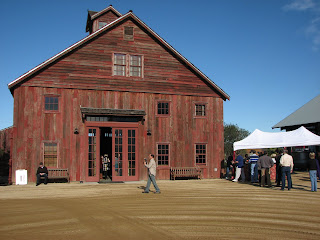
Nickel & Nickel is, as I have mentioned before, an off-shoot of Napa's Far Niente. Whereas Far Niente focuses on a single estate Cabernet Sauvignon and Chardonnay, the concept behind Nickel & Nickel is to create single varietal wines from single vineyards from the best sites across Napa and Sonoma. On Saturday they were pouring five of their single vineyard Cabs, along with a sampling of a few other varietals. On drinking the wines I was struck by the consistent attention to detail and restraint, both of which reflect the grounded and friendly group of individuals who come together to produce these thoughtful renditions of the classic noble grapes.
We started the day outside with the 2006 Truchard Vineyard Chardonnay from Carneros, which was clean and crisp with intelligent depth and roundness produced not from malolactic fermentation, but from the ripeness of the fruit itself. I think, perhaps, that the acidity demands a proper food pairing, but the wine is lively and accentuated on its own. A very nicely done bottle of wine. Very Good+ to Excellent. Next on the list, and inside the barn, was the 2005 Copper Streak Vineyard Cabernet Sauvignon, a wine made in the Stag's Leap district at a special and very small low-yielding vineyard at the base of the Shafer property. On the nose I found the classic woody cedar notes to be intricately layered with forest-floor and savory herb notes. What seems subtle up front becomes truly expansive on the mid-palate, with cassis, earth, cedar and mint dancing counterpoint and constantly evolving. The finish, while long, promises so much more with bottle age. I would even go so far as claiming this wine to be a long-lost sibling to a left bank Bordeaux. Atypical for California, and a stunning amalgam of fruit, structure, restraint and elegance. Excellent+. $90.
 The 2005 Regusci Vineyard Block 4 Cabernet Sauvignon could be described as the more outgoing and fun-loving Stag's Leap District sister to the more brooding and contemplative Copper Streak. This cab is soft and up front on the nose with distinct red berries and cherries making way for a solid, but easy drinking tannic structure that provides oomph without getting in the way of immediate drinkability. This is unmistakably Californian, and certainly will be enjoyed by those seeking classic Napa cab. Very Good+. $90.
Jumping over to the west side of the valley we next tasted the 2005 Witz End Vineyard Cabernet from Rutherford. This had sweet black cherry fruit throughout the nose and palate, with rich spice notes joining in to add complexity. This is very much a Rutherford Cab, which are a bit too sweet for my tastes. I also didn't find this as well structured as either of the first two cabs, with the Copper Streak being the standout in that dimension. Nonetheless, this will satisfy those who look for the sweet fruit element in their wine. However, I would recommend the Regusci over this for fruit forwardness and drinkability. Very Good to Very Good+. $90. Before heading over to taste the last two Cabs we gave the 2005 Suscol Ranch Merlot and the 2006 Ponzo Vineyard Zinfandel a sniff and sip. The Suscol Merlot has its source in the Southern Napa Valley. This wine, with its earthy and dense dark-fruit nose, was the original inspiration for Nickel & Nickel. The palate was jammy but supple with a quality earthy and dusty tannic backbone. I love when merlot is done right - with the right structure the soft and pretty fruit becomes grounded and avoids the cloying sweetness that plagues the average California merlot. Very nicely done: for the real merlot lover. Very Good+ to Excellent. $55.
Similarly, the Ponzo zinfandel avoided what can make zin a controversial grape: the tendency towards high alcohol and overly sweet, super-ripe fruit. The Ponzo vineyard is located in the Russian River Valley at a site where the grapes ripen more evenly than is common for zinfandel. This allows Nickel & Nickel to keep the alcohol at a relatively sane (for zin) 14.9% abv. This has far more structure and tannin than most zins and completely avoids any residual heat on the finish. Still filled with juicy and spicy flavours and aromas, this wine allows the skeptical drinker to experience the joys of zin, minus the set-backs. Other zin-loving drinkers may find this a bit too restrained or tannic for their tastes. Very Good. $48. Stepping outside onto the crush-pad my colleague Martin and I sampled the two remaining Cabs. First up was the forward Oakville 2005 John C. Sullenger Vineyard Cabernet with its classic oakville velvet texture and focus. As Martin commented, this was easy to drink, focused, and linear. I would add that there was a distinct oak character, but that this didn't overwhelm the herbal blackberry elements. Nicely done, even if not as expansive as the Copper Streak. In the end, its linearity is its charm. Very Good+ to Excellent. $90.
 Concluding this Cabernet extravaganza was the 2005 Vogt Vineyard Cabernet from Howell Mountain. For those who aren't aware, Howell mountain is known, even more than most mountain sites, for its massive tannins due to the increased exposure to sunlight and high elevation. This wine did not dissapoint in that regard. Here we had a massive bruiser of a wine with incredible richness: chocolate and cassis predominated. I would describe this wine as 'brambly' and huge. Not for the faint of heart, but power lovers will lap this up. Excellent to Excellent+. $90.
Two hours later we had finally tasted through the fantastic selection of wines and developed a sense of the Nickel & Nickel Style: balance, restraint, focus, and dedication to the unique characteristics of a particular site. There was not a bad wine amongst the bunch and I commend Nickel & Nickel for proving the singularity of some of Napa and Sonoma's greatest terroirs. Thanks kindly to the winery for giving us the opportunity to taste through such a wide variety of wines. Up next: Cakebread...
